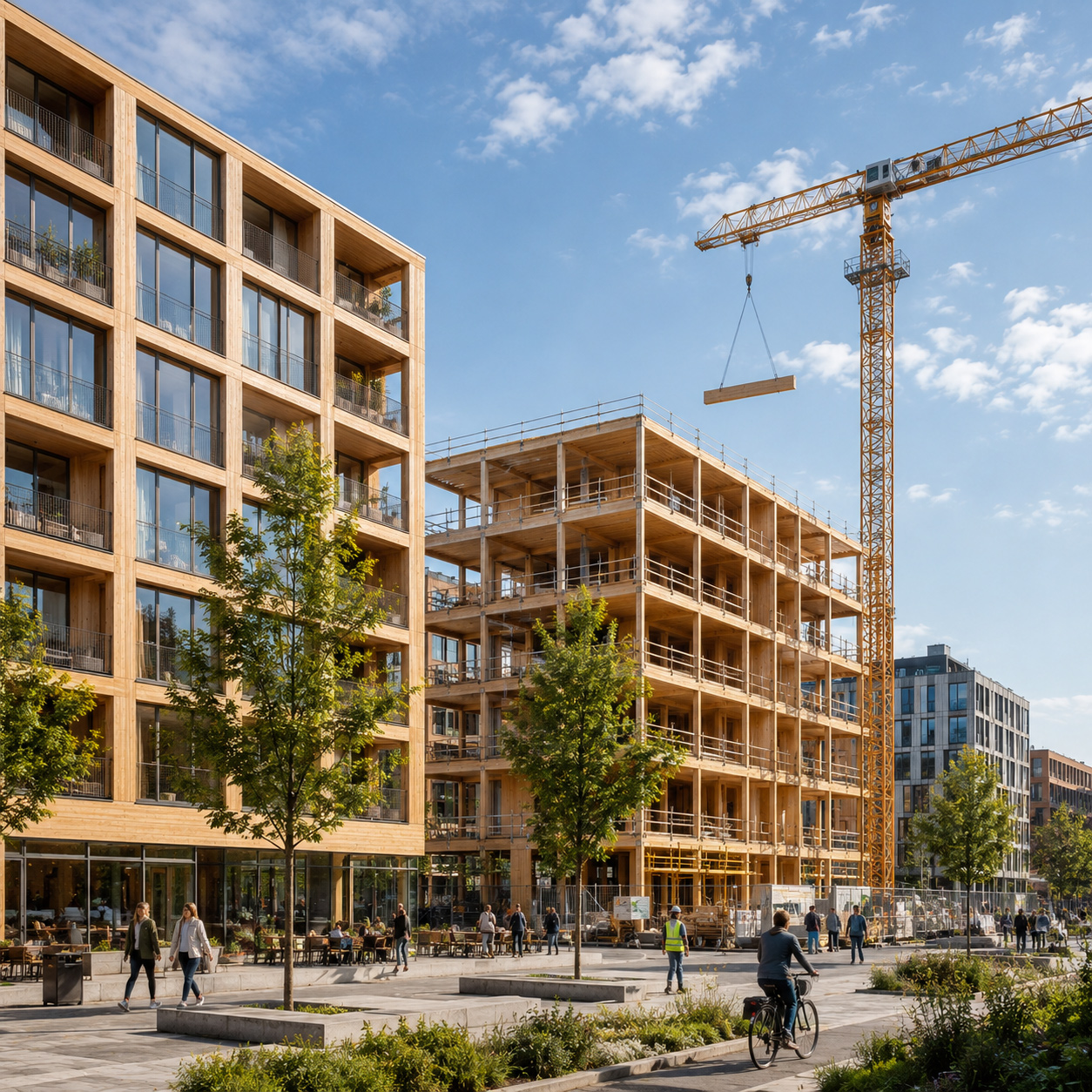
The Boom in Wood Construction in Europe: Opportunities for Prefabricated Component Plants
Wood construction is experiencing a renaissance in Europe. While new residential construction in general is under pressure in many markets, the share of prefabricated wood construction is growing steadily—driven by climate goals, shorter construction times, and a new awareness of sustainable building. For prefabrication plants, this boom means more orders, larger components, and higher production rates. And with that come new demands on transportation and load securing.
The Numbers: Prefabricated Wood Construction Is Growing Despite a Challenging Environment
The latest market data clearly confirms the trend:
- 26.5% share of prefabricated construction in Germany (2025) —a new record; five years ago, it stood at 22.2%, and at the turn of the millennium, it was 13.5%
- +16.7% increase in newly approved prefabricated wood homes in Germany (2025) – 13,473 units built using the prefabricated construction system, with an overall increase in single-family homes of +14.6%
- +13% increase in newly approved housing units in Germany (2025) – following three consecutive declines, a significant increase back to 198,100 approved units
In Austria, the picture is similar: Despite a historic low in overall new housing construction (2024: only 32,100 new apartments approved), timber construction is booming. Since 2021, the Austrian Timber Construction Initiative has already funded 194 projects, mobilized 28 million euros in funding, and saved 70,000 metric tons of CO₂.
And what about 2026? WIFO forecasts a noticeable recovery in construction investment in Austria—driven by falling interest rates and government subsidy programs totaling two billion euros. Timber construction is expected to benefit disproportionately from this.
Why is the prefabricated wood construction industry booming right now?
This upswing is no coincidence. Several structural factors are driving the growth of prefabricated wood construction:
- Carbon Footprint as a Competitive Advantage: Every cubic meter of wood used in construction sequesters about one metric ton of CO₂ over the long term. In an industry under pressure to meet EU climate protection targets, this becomes a real differentiator compared to concrete and steel. Wood is one of the few building materials with a truly positive carbon footprint—and this is increasingly being recognized by builders, designers, and policymakers.
- Speed through prefabrication: Prefabricated wood components are produced and inspected at the factory and delivered to the construction site on a just-in-time basis. This reduces the actual construction time by 30 to 40% compared to solid-construction methods. In a market with increasing pressure on construction costs and timelines, this is a decisive advantage.
- Multi-story wood construction is on the rise: CLT (cross-laminated timber) and glulam (glued-laminated timber) now enable robust structures for multi-story buildings that compete directly with concrete in urban projects. Multi-story wood construction is no longer a niche—it is becoming the standard option for residential and office buildings.
- Serial Construction as a Political Goal: The Federal Association of German Prefabricated Construction (BDF) has declared serial construction and wood construction to be strategic priorities. At the EU level as well, prefabricated wood construction is regarded as a key technology for the construction transition. This ensures long-term political support and funding.
What does this mean, specifically, for precast logistics?
More prefabricated wood construction doesn't simply mean more work—it means different work. Prefabrication plants and transportation companies that want to benefit from this boom must set up their logistics accordingly:
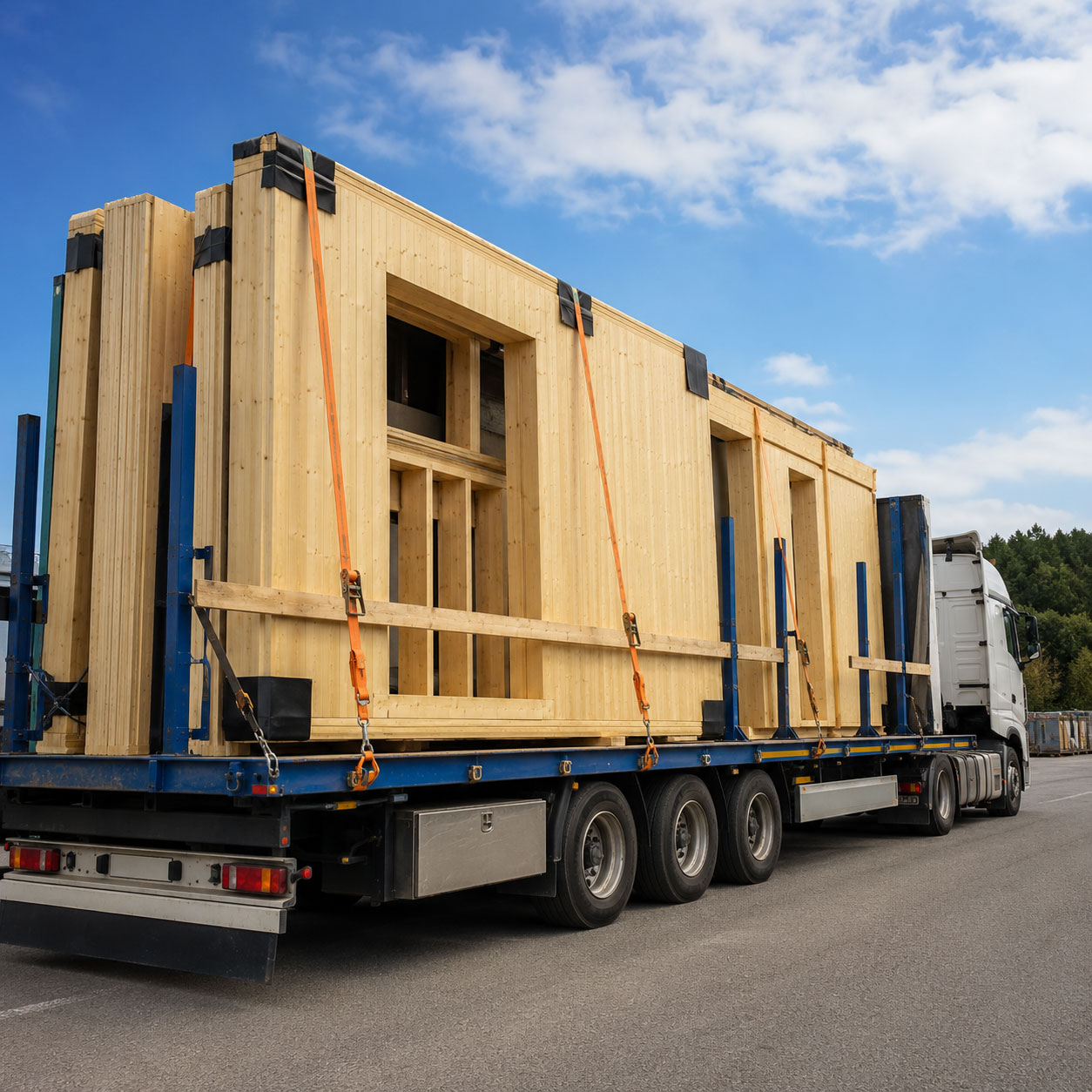
- Larger panels, wider transport frames: Modern wood-frame and CLT walls are becoming increasingly large-format. Panels with widths exceeding 2 meters and heights ranging from 3 to 4 meters are no longer uncommon. This places new demands on transport racks: wider support surfaces, higher load capacities, and the ability to load from the side. Swap bodies with a width of up to 2,550 mm and side-loading capabilities are often the ideal solution here.
- Precise, Just-in-Time Transportation: Prefabricated wood construction relies on precisely timed supply chains: The components arrive at the construction site exactly when they are to be installed—not before, not after. This requires reliable, predictable transport racks without unplanned downtime. Preventive maintenance and regular visual inspections of the racks are not just a nice-to-have, but a prerequisite for trouble-free operation.
- Surface protection is becoming increasingly critical: Exposed wood surfaces are expensive and delicate. Shipping damage caused by contact with metal, pressure marks, or improper support points results in direct claim costs. Shipping racks with plastic protection at all contact points—as with R-TECH Standard—are not an option but a requirement in prefabricated wood construction.
- Storage Capabilities on the Construction Site: Because assembly sequences on construction sites are often flexible, components sometimes need to be temporarily stored for hours or days at a time. Transport racks that also function as stable storage systems—providing reliable support even on uneven ground—save time, space, and the need for additional equipment.
Conclusion: Those who invest now will grow along with the market
The boom in prefabricated wood construction in Europe is not a short-term trend—it is structural, politically driven, and secured for the long term by climate goals. Prefabrication plants that equip their logistics systems accordingly now are securing the capacity needed for growth in the coming years. R-TECH supports this development with transport racks designed to meet the requirements of modern prefabricated wood construction—from ILP to swap bodies, from standard solutions to custom projects.
Ready for the boom in prefabricated wood construction?
R-TECH can advise you on the right transport racks for your prefabricated wood components. office@r-tech.at | +43 (0) 2638 / 77735 | www.r-tech.at
FAQ